Warehouse theft in the Philippines rarely looks like a movie heist. It looks like a case of goods that 'fell off the count,' a gate log with a missing hour, a delivery truck that left two cartons heavier than its manifest. Industry studies put typical shrinkage at 1–2% of inventory value — on ₱20 million of stock, that is ₱200,000–₱400,000 a year leaking out quietly.
Effective security is layered: physical barriers, surveillance, people, and paperwork, each covering the others' blind spots.
Layer 1: The perimeter and the yard
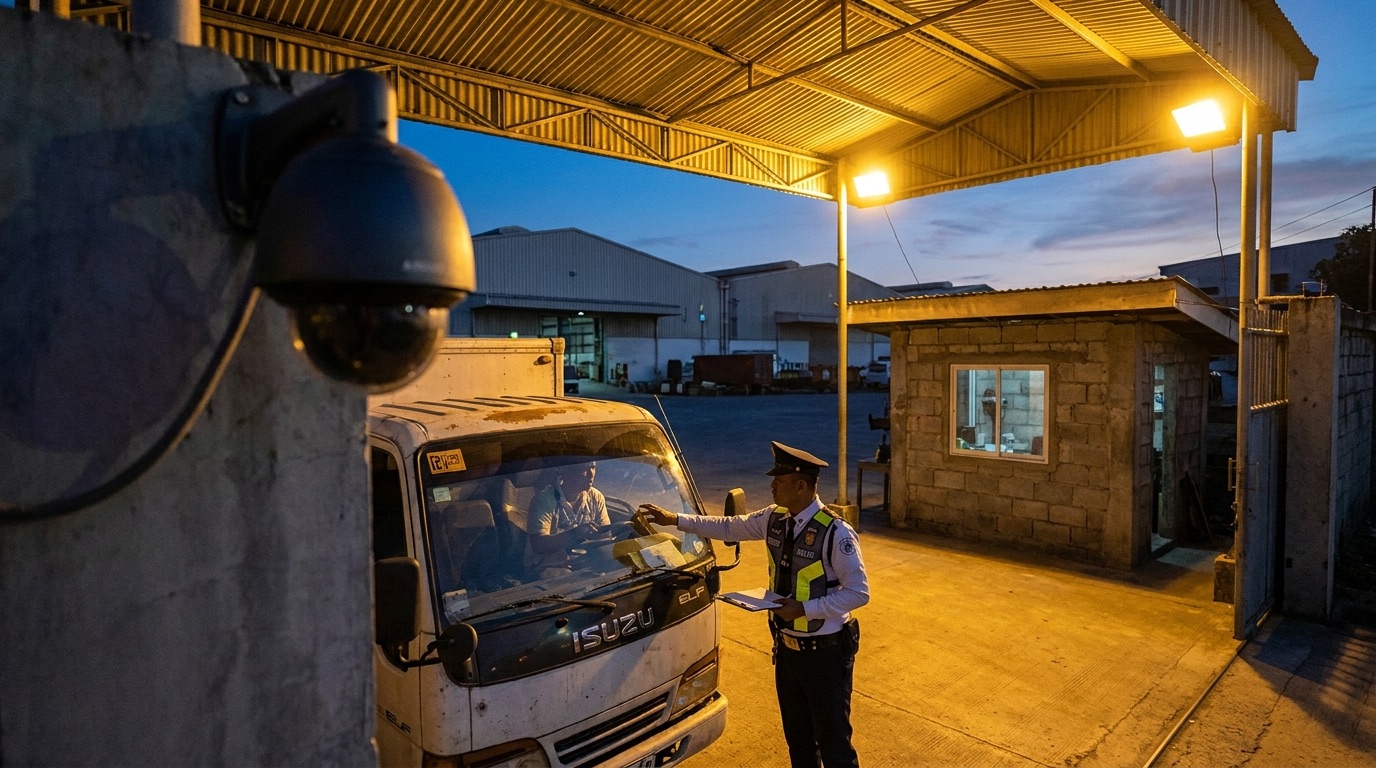
Start outside. A sound perimeter fence (2.4m minimum, in good repair, with anti-climb features on vulnerable stretches), a single controlled vehicle gate, and full yard lighting eliminate the easiest attacks. Dark corners of the compound are where goods staged 'temporarily' disappear.
Keep the yard disciplined: no loaded vehicles parked overnight outside CCTV coverage, no scrap or pallet stacks against the fence (they are ladders), and clear sight lines from the guardhouse to every gate.
Layer 2: CCTV that actually gets used
Cameras deter and, more importantly, resolve disputes — with staff, truckers, and insurers. A useful minimum for a small-to-mid warehouse covers every entry point, the loading bays, high-value storage zones, and the dispatch staging area where most shrinkage actually happens.
Buy for retention and reviewability, not megapixels alone: 30 days of storage minimum, timestamps synced, and one person responsible for checking that every camera records every day. A dead camera discovered after an incident is the most common CCTV failure in PH facilities.
- Cover: gates, dock doors, staging areas, cage/high-value zones, weighbridge if any
- Retention: 30+ days; export and preserve footage immediately after any incident
- Placement: capture faces at entry points and plate numbers at the gate
- Discipline: daily camera health check on the duty guard's checklist
Layer 3: Guards and the human factor
Most warehouses contract a licensed private security agency; expect roughly ₱25,000–₱40,000 per guard per month per shift depending on region, so a 24/7 single post runs ₱75,000–₱120,000 monthly for the rotation. That is real money — make it earn its keep with written post orders: gate logging procedure, truck inspection steps, visitor rules, and incident escalation.
Rotate guards periodically and audit the logs against CCTV. The uncomfortable truth of warehouse security is that losses usually involve insiders — which is why the goal of your system is not suspicion of everyone but procedures that protect honest staff by making theft hard to conceal.
Layer 4: Access control and paperwork
The cheapest, highest-yield security tool is documentation. Every movement of goods should generate paper (or a scan): gate passes for anything leaving, delivery receipts checked against physical count at the dock, and a truck seal regime for full loads.
Control who goes where: drivers stay in a waiting area, not the racking aisles; visitors are logged and escorted; keys and padlocks are registered to named holders. Then close the loop with inventory: weekly cycle counts on fast-moving and high-value SKUs catch shrinkage in days instead of at the annual count, when the trail is cold.
- Gate pass signed by an authorized approver for every outbound item, including scrap and 'defectives'
- Numbered truck seals logged at sealing and checked at destination
- Cycle counts weekly on top-value SKUs; investigate every variance same week
- CCTV + gate log + inventory records cross-checked after any anomaly
What to look for when renting
If you are still choosing a facility, security is partly inherited from the property: compounds with a single gate, existing guardhouse, perimeter walls, and neighbor businesses that operate around the clock are meaningfully safer starting points than standalone buildings on quiet roads.
Ask the owner about theft history in the compound and who bears responsibility for perimeter security in the lease. Warehouse Hub listings note existing CCTV and guard arrangements, and our reps can raise security commitments — added lighting, fence repairs — with owners during negotiation, before you sign rather than after your first incident.