Warehouse maintenance in the Philippines is a race against two opponents: water and time. The climate throws 20+ typhoons a year at your roof, 80-percent humidity at your inventory, and a wet season that finds every weak gutter and clogged drain. The good news is that a modest, scheduled maintenance rhythm prevents almost all of the expensive failures — and most of it costs labor, not capital.
Here is a practical program sized for a typical 500–3,000 sqm facility, organized by system.
Roof and gutters: your #1 priority before June
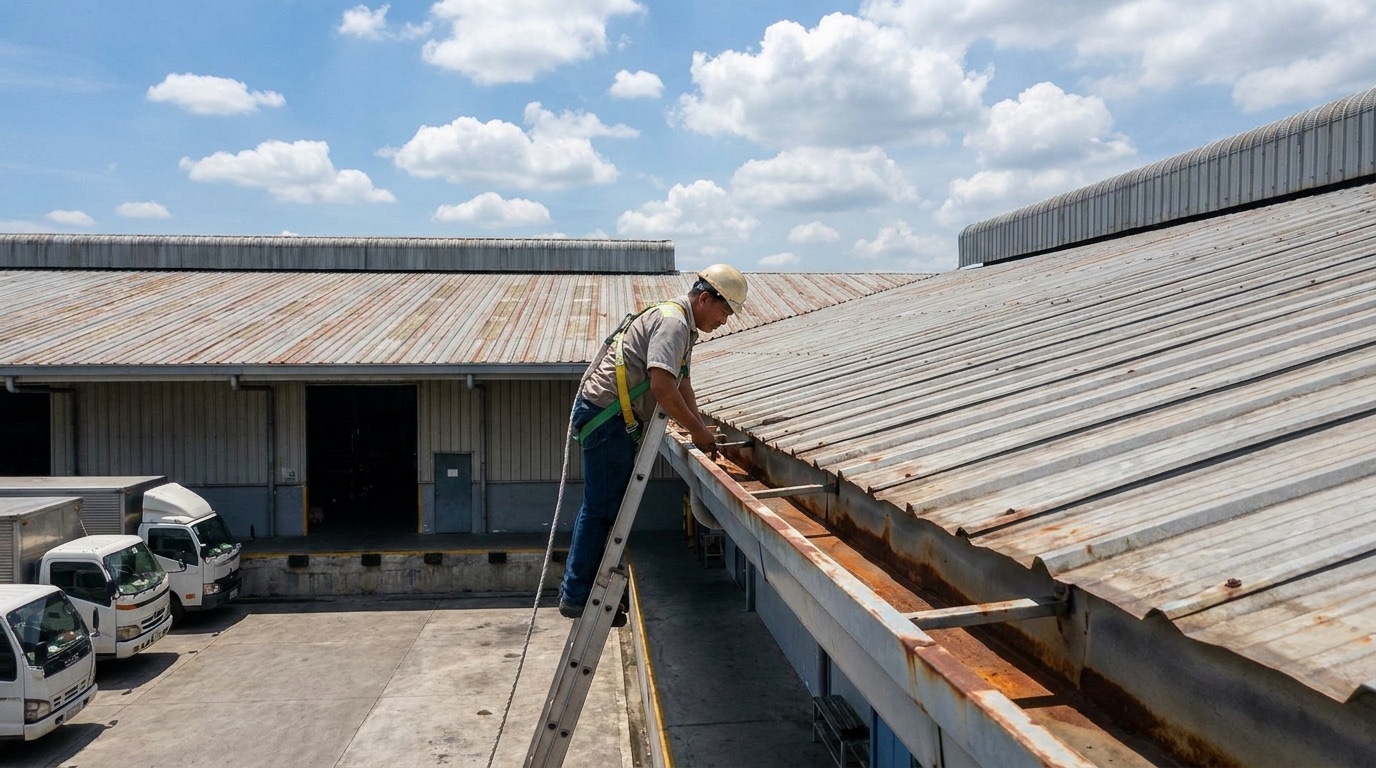
Almost every catastrophic inventory loss in PH warehouses traces back to the roof. Corrugated metal roofing rusts at the laps and fastener points, sealants dry out, and gutters clog with dust and leaves — then the first habagat downpour of June turns pinholes into waterfalls.
Schedule a full roof inspection every April or May, before the rains. Walk the roof (safely, on crawl boards), photograph every rust spot and patched sheet, and recoat or replace sheets showing corrosion. Clear and flush every gutter and downspout, and check that downspouts actually discharge away from the building, not against the wall footing.
- April–May: full roof inspection, recoating, sealant renewal, gutter clearing
- Monthly June–November: quick gutter check after major rain events
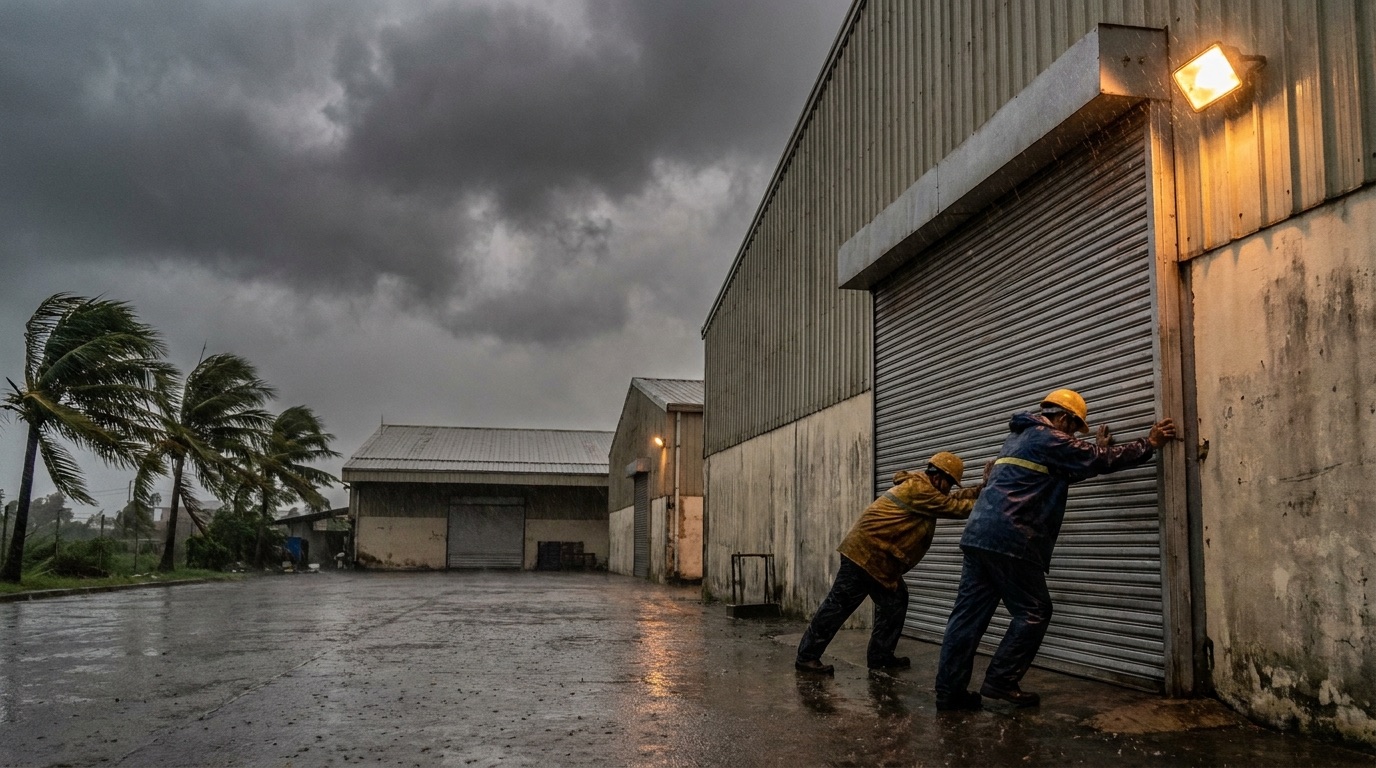
- After every typhoon: walk the perimeter, check for lifted sheets and new leaks
Drainage and flood defenses
Your site drainage matters as much as your roof. Canals silt up, catch basins fill with debris, and a blocked culvert can put half a meter of water in your compound even if the roof holds perfectly.
Desilt perimeter canals and catch basins at least twice a year — once before the wet season and once mid-season. If your area has any flood history, keep sandbags or portable flood barriers on site and test your sump pumps monthly during the rains. A ₱15,000 spare pump is cheap against a pallet level of soaked goods.
Floors and joints
Concrete floor joints are consumables. Forklift traffic chips joint edges, chips become craters, and craters shake loads, damage forklift wheels, and eventually crack the surrounding slab. Inspect high-traffic lanes quarterly and repair joint spalls early with semi-rigid epoxy fillers — a ₱500 repair today is a ₱50,000 slab repair in two years.
Keep floors sealed and dust-free. Concrete dusting isn't just a cleaning nuisance; the dust gets into product packaging and equipment. A densifier/sealer application every few years pays for itself in cleaning labor alone.
Racking: inspect like your people's safety depends on it
Because it does. Racking collapses are rare but devastating, and they almost always start with a forklift strike that nobody reported. Adopt a simple traffic-light inspection: green (fine), amber (damaged, offload and schedule repair), red (offload immediately and isolate).
Walk every aisle monthly looking for bent uprights, dislodged safety pins, missing beam locks, and overloaded bays. Post the rated load per bay level on the racking itself, and make 'report every strike' a no-blame rule — the strike isn't the offense, the silence is.
Pests, humidity, and stored goods
Rats, weevils, and termites thrive in Philippine warehouses, especially those storing food, paper, or wood packaging. Contract a licensed pest control operator for monthly service, keep a 60cm inspection strip clear along all walls, and ban eating on the warehouse floor. Bait stations beat sporadic fumigation for rodents.
Humidity management matters for electronics, paper, and hygroscopic goods. Ventilate aggressively (ridge vents and wall louvers do a lot for free), keep goods on pallets off the slab, and use dehumidifiers only in sealed rooms where they can actually win.
- Monthly: pest control service, racking walk-through, exit light and extinguisher checks
- Quarterly: floor joint inspection, door and dock leveler servicing, electrical panel thermal check
- Twice yearly: canal desilting, full FDAS/sprinkler test, forklift major service
Who pays: lessee vs owner
In standard PH leases, the owner keeps responsibility for structural elements — roof frame, columns, slab — while the lessee handles day-to-day upkeep and anything they installed. But 'standard' only counts if it is written. Put the maintenance matrix in the lease itself: who inspects the roof, who pays for gutter repairs, who maintains the fire system.
If you are still choosing a building, weigh maintenance condition heavily — a well-kept facility at ₱20/sqm more is usually cheaper than a neglected one. Warehouse Hub reps flag visible maintenance issues during viewings so they can be negotiated into the deal, either as owner repairs before turnover or as rent concessions.