The Philippines averages twenty tropical cyclones a year, and roughly half make landfall. For a warehouse owner or operator, that is not a risk — it is a certainty with a variable date. The buildings that sail through a Signal No. 4 storm and the ones that lose their roofs are usually separated not by construction budget but by preparation done in the calm months.
This guide covers the physical hardening and the operational drill, in the order of what fails first.
The roof: where typhoon damage starts
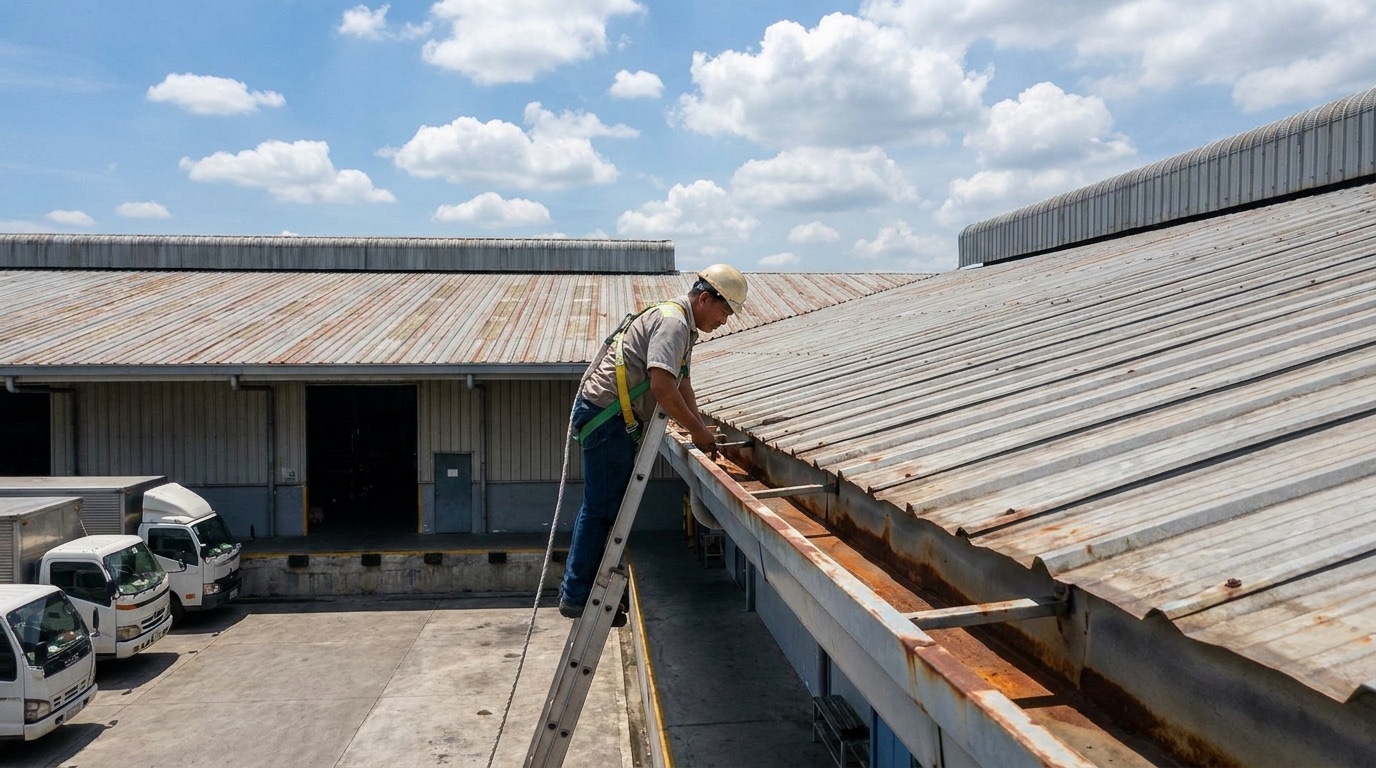
Wind does not usually push a roof in — it lifts it off. Suction at the roof edges and corners peels back sheets starting at any loose fastener, and once one sheet lifts, the rest unzip. The single highest-value typhoon preparation is a fastener audit: check every roof screw along edges, ridges, and eaves, replacing rusted fasteners and adding more at the perimeter where uplift is strongest.
Check the condition of ridge caps, flashings, and skylights — fiberglass skylight panels are notorious first failures and become holes that pressurize the building from inside. If your roofing is 15+ years old and visibly corroded, budget for progressive replacement before the season, starting with windward edges.
Doors and openings: keep the wind outside
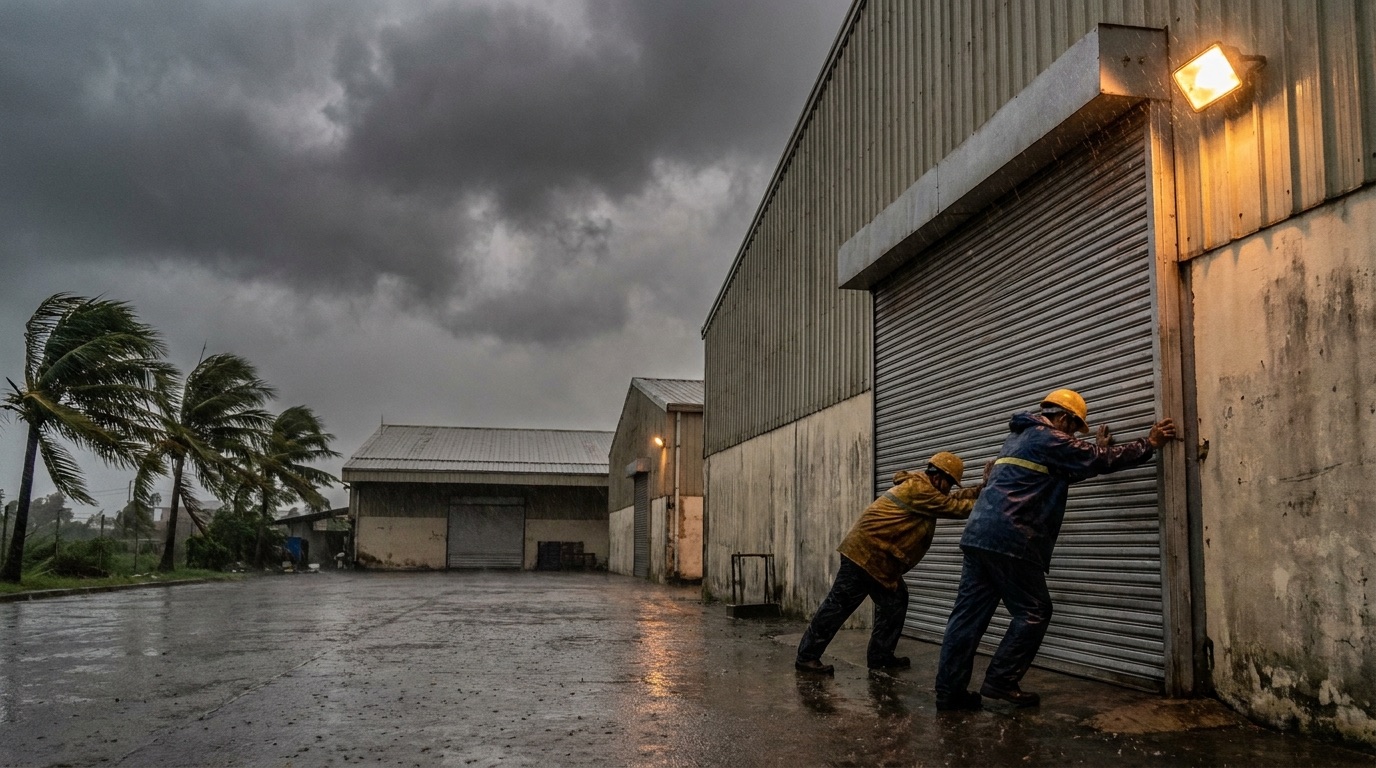
If a large door fails during a storm, wind enters, internal pressure spikes, and the roof loses from below the strength it was barely keeping from above. Roll-up doors are the weak point: check the guides, wind locks, and bottom bars, and brace large doors from inside when a strong typhoon is forecast.
Walk the building for anything that becomes an opening at 150 kph: unsecured louvers, deteriorated wall sheets, and gaps at the eaves. Seal and secure them in the dry season, not the night before landfall.
Site drainage and flood defense
Typhoon rain arrives faster than most site drainage was designed for. Desilt canals and catch basins before June, confirm the public drainage your site discharges into is actually flowing, and stock physical flood defenses if your street has any history of ponding.
Inside, enforce a wet-season floor rule: nothing of value stored directly on the slab. The lowest pallet level should be your cheapest-to-lose stock; some operators keep the bottom level empty entirely from August to October in flood-adjacent areas.
- Desilt canals, basins, and culverts by end of May
- Test sump pumps monthly; keep a fueled backup pump
- Pre-position sandbags/flood barriers at doors and dock ramps
- Keep bottom racking level for low-value or water-tolerant stock in wet season
Power, comms, and the 72-hour plan
Assume the grid goes down and stays down for one to three days after a major storm. Test your generator monthly under load, keep fuel for at least 48 hours of essential running (security lighting, comms, and any refrigeration), and protect the generator itself from flooding — a submerged genset is a paperweight exactly when you need it.
Write a one-page typhoon plan and drill it once a year. It should name who decides to activate, who does what in the 24 hours before landfall, and who inspects what afterward.
- T-72h: monitor PAGASA bulletins; confirm staffing and supplies
- T-24h: brace doors, clear loose yard items (pallets and scrap become missiles), move stock off floor level, charge equipment, back up records
- T-0: nobody on site during the storm except where a safe, designated shelter exists
- T+12h: photograph all damage before touching anything — your insurance claim depends on it
Insurance: read the policy before the season
Standard fire insurance in the Philippines does not automatically cover typhoon and flood — 'Acts of God' or 'typhoon, flood, and earthquake' cover is an extension you must buy. Check whether your policy covers the building, the stock, or both, and whether business interruption is included.
Document your inventory and facility condition with dated photos each quarter. After a storm, claims with good documentation settle in weeks; claims without it settle in arguments.
If you are still choosing a building
The cheapest typhoon-proofing is site selection. Favor buildings with newer roofing on documented purlin spacing, elevated slabs, generous site drainage, and no history of flooding — and treat every August viewing as a gift: you see the building under real conditions.
Warehouse Hub's listing data flags flood history and roof condition where verified, and our reps will schedule wet-weather viewings on request. It is a strange thing to hope for rain on viewing day, but it is the best due diligence the sky can offer.