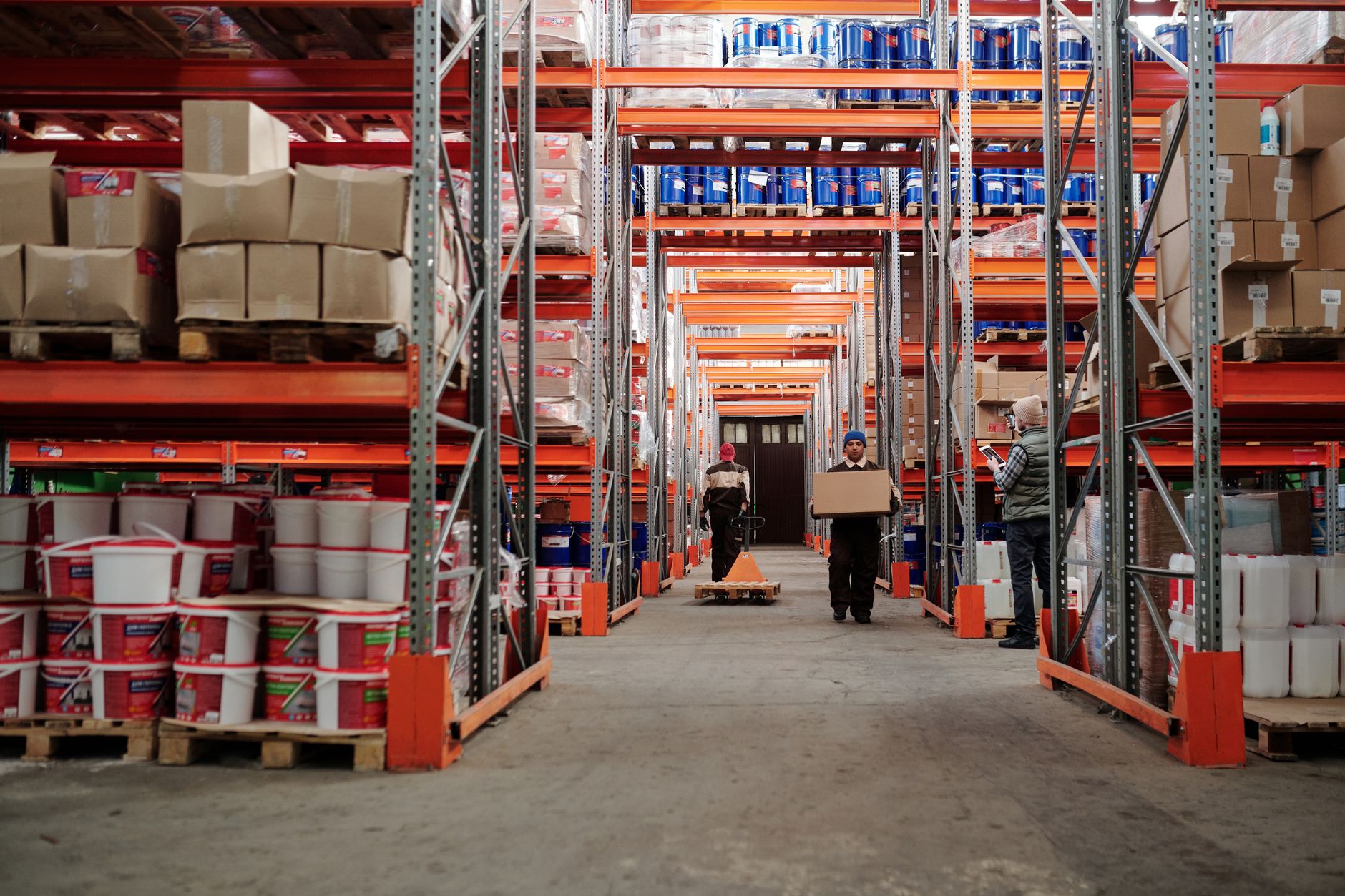
A fulfillment warehouse for e-commerce is a different animal from a storage warehouse. A distributor's warehouse optimises for holding pallets and shipping full loads; an e-commerce fulfillment centre optimises for velocity — thousands of small, individual orders picked, packed, and handed to couriers every day, with the whole operation lurching to several times its normal volume on a handful of sale dates a year.
The Philippine online retail market has grown into one of Southeast Asia's most active, driven by Shopee, Lazada, TikTok Shop, and a wave of direct brands selling through their own sites and social channels. Choosing the right building for that operation means weighing last-mile geography, courier access, returns capacity, and surge headroom together. This guide covers what to look for.
Location is a last-mile decision, not a rent decision
For a fulfillment operation, warehouse location is really a decision about how fast and how cheaply you reach your customers. The relevant metric is not rent per square metre but cost and time per delivery, and for most Philippine e-commerce brands the demand centre is Metro Manila and its surrounding provinces, where the bulk of online orders ship.
That pulls fulfillment toward the edges of NCR and the near provinces — Parañaque, Valenzuela, Taguig, and the Cavite and Laguna gateways — where you get reasonable rents while staying close to both the courier hubs and the dense delivery zones. A cheaper warehouse two hours further out can quietly cost more once you add the trucking to feed couriers and the slower promised delivery times that dent conversion. Compute cost per delivery, not cost per square metre, and let that rank your options.
Courier access: your warehouse must feed the network
In Philippine e-commerce, the courier is your last mile, and your warehouse has to plug into that network efficiently. J&T Express, Ninja Van, Flash Express, LBC, and the marketplace-integrated logistics arms all run pickup routes and drop-off points, and the practical question is how easily each can service your location — daily scheduled pickups from your dock, or you shuttling parcels to a hub.
Space and access shape this. You need dock or door capacity for multiple courier vehicles to collect in the same window without gridlocking each other, and a manifest-and-handover area where outbound parcels are staged, scanned, and signed over cleanly. Being near courier sorting hubs shortens the last mile and can buy you later daily cut-offs — the difference between an order placed at 3pm shipping today or tomorrow. Confirm that your chosen couriers actually serve the area with regular pickups before you sign.
- Check that your key couriers (J&T, Ninja Van, Flash, LBC) run scheduled pickups to the location, not just drop-offs.
- Ensure dock or frontage space for several courier vehicles to load in the same window.
- Stage a dedicated manifest/handover zone so outbound scanning and sign-over do not clog the packing area.
- Favour proximity to courier sorting hubs for later cut-offs and shorter last-mile times.
Returns: design for them or drown in them
E-commerce returns in the Philippines run high, inflated by cash-on-delivery — a large share of orders still pay on delivery, and COD produces failed deliveries, refused parcels, and returns-to-sender at rates a card-paid business never sees. A parcel that comes back is not a shipment reversed; it is a small project: receive, inspect, decide (restock, refurbish, dispose), and update inventory. Ignore returns in your layout and they pile up in a corner, tie up cash in limbo stock, and corrupt your available-to-sell count.
Design a returns zone from day one, physically separated from outbound so returned goods never leak back into pick faces before inspection. Give it bench space to open, inspect, and grade parcels, and a clear disposition flow so items move to restock, quarantine, or disposal quickly. In a COD-heavy operation the returns lane is not an afterthought — it is a core process that deserves real floor and a defined procedure.
Surge capacity: engineering for 11.11 and 12.12
Philippine e-commerce runs on the double-date mega sales — 9.9, 10.10, 11.11, 12.12 — plus payday sales and the Ber-months build-up. On these dates order volume can spike to several times a normal day, and a fulfillment operation that runs comfortably in February can seize up completely on 11.11. The warehouse has to be chosen and laid out for the peak, because that is the day that makes or breaks customer trust.
Surge headroom is physical before it is procedural. You need floor to stage the inventory build-up before a sale and to hold the wave of packed orders waiting for courier pickup during it. You need packing stations that can be multiplied with temporary hires, and a layout where extra hands do not trip over each other. Undersize the staging and the whole flow jams; goods pile in aisles, pickers and packers collide, and orders miss their ship-by promises. Size the packing and staging zones for peak throughput, not the daily average.
Space for pick-pack, not just storage
A fulfillment warehouse spends a larger share of its floor on operations and a smaller share on deep storage than a distribution warehouse does. Storage might be only 55 to 70 percent of the building; the rest is the pick-pack engine — packing benches, consumables (boxes, mailers, tape, dunnage), label printing, and the staging that feeds couriers.
Slotting matters intensely here because pickers are on foot all day. Keep the fast-moving bestsellers in a compact, waist-height golden zone near packing so the bulk of picks are short walks, and push slow SKUs to the margins. A pick-pack layout that minimises footsteps is the cheapest productivity gain in the building, and it compounds every single order — which, in a peak-season operation shipping thousands a day, is an enormous amount of saved labour.
Putting it together
The right e-commerce fulfillment warehouse is close to your delivery demand, well-served by the couriers you actually use, laid out with a real returns process, and sized with enough packing and staging headroom to survive 11.11 without collapsing. Rent per square metre is the last thing to optimise, not the first — a slightly pricier building that ships faster and cheaper per order wins on the numbers that matter.
Because location, courier access, and dock capacity are hard to change once you have signed, they are worth verifying before you commit. Warehouse Hub can shortlist buildings near your delivery zones and courier hubs with the dock and frontage capacity a fulfillment operation needs — so you view spaces that fit online selling, not generic storage.