A warehouse is, from a fire officer's point of view, a large volume of concentrated combustible material with people and forklifts moving through it. That is why fire safety is one of the most scrutinized areas of warehouse compliance in the Philippines, and why a failed fire inspection can hold up your entire business permit.
This guide covers the fire safety framework warehouses fall under, the systems the Fire Code expects, the inspection process, and the special case of high-piled storage. It is orientation, not a substitute for a fire safety practitioner's assessment or the Bureau of Fire Protection's own rulings on your specific site.
The Fire Code framework
Fire safety in the Philippines is governed by the Fire Code of the Philippines, Republic Act 9514, and its implementing rules, enforced by the Bureau of Fire Protection under the Department of the Interior and Local Government. The Fire Code classifies occupancies by use and hazard, and a warehouse or storage occupancy carries requirements scaled to its size, height, and the nature of what is stored.
The higher your fire load, meaning the more combustible your stored goods and packaging, the more the Code expects in terms of suppression, detection, and separation. A warehouse of inert steel parts is treated very differently from one packed with plastics, textiles, aerosols, or paper.
Detection: fire alarm and detection systems (FDAS)
A Fire Detection and Alarm System (FDAS) is the nervous system of warehouse fire safety. It combines smoke and heat detectors, manual pull stations, notification devices such as horns and strobes, and a control panel that can signal occupants and, in modern setups, monitoring services.
For larger warehouses, FDAS is typically expected rather than optional, and the BFP will look for a system that is properly designed, installed, and maintained, with documentation. The point is early warning: in a high-ceilinged warehouse, a fire can grow substantially before anyone smells smoke from the floor, so ceiling-level detection buys the minutes that matter.
Suppression: sprinklers and ESFR
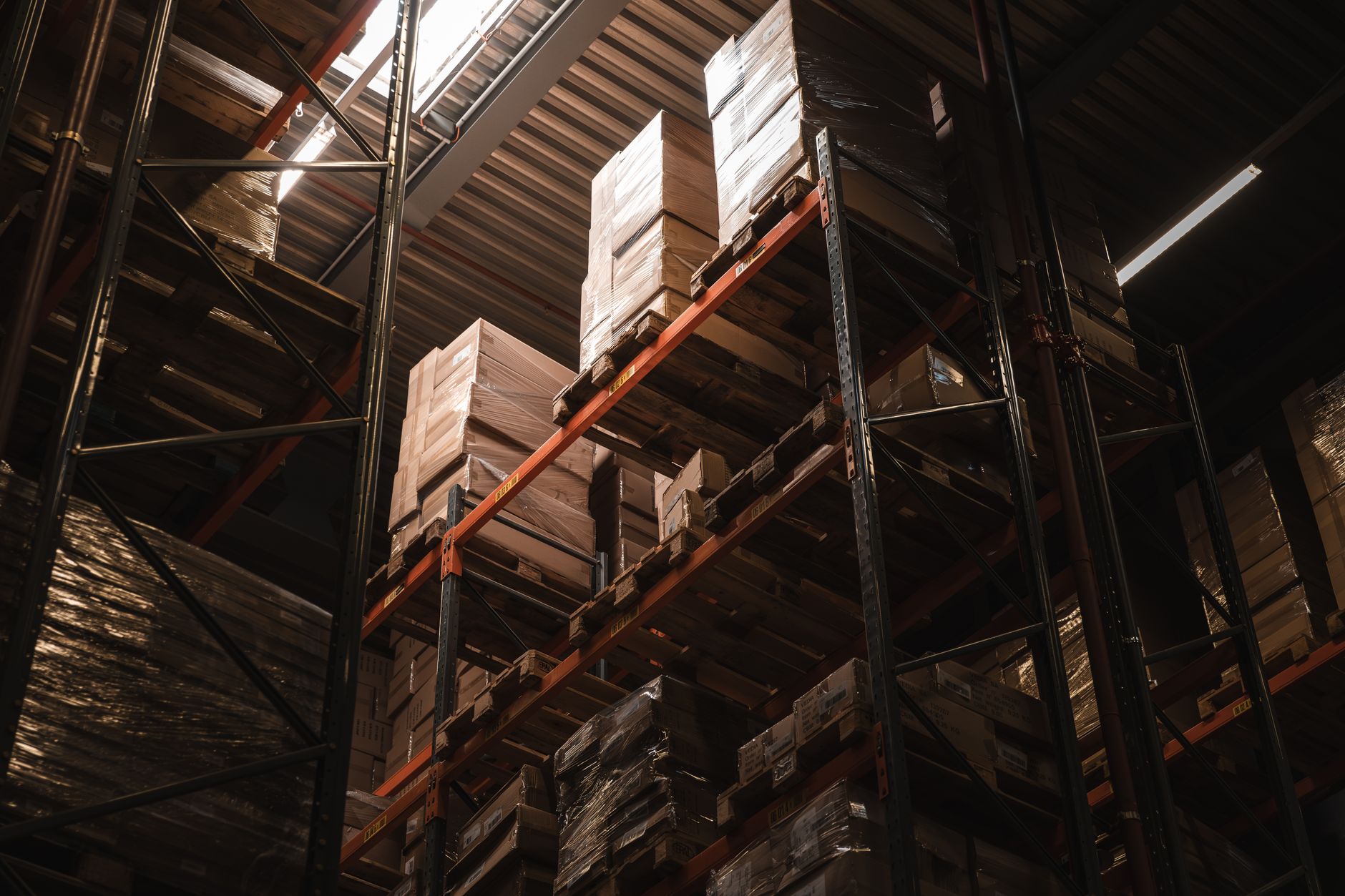
Automatic fire sprinklers are the workhorse of warehouse suppression. For ordinary storage, a wet-pipe sprinkler system designed to the appropriate hazard classification is common. But warehouses with tall racking present a specific challenge: a fire low in a rack can be shielded from ceiling sprinklers by the goods above it.
This is where ESFR, Early Suppression Fast Response sprinklers, come in. ESFR heads are designed to deliver a large volume of water quickly from the ceiling to suppress a fire at its source, and in many high-rack designs they can replace in-rack sprinklers. Choosing between standard sprinklers, ESFR, and in-rack systems is an engineering decision driven by storage height, commodity class, and rack configuration, and it should be made by a competent fire protection designer.
- Wet-pipe sprinklers for typical storage hazards
- ESFR ceiling sprinklers for high-rack, high-challenge storage
- In-rack sprinklers where ceiling-only protection cannot reach the seat of a fire
- Adequate water supply and, often, a dedicated fire pump and reserve to feed the system
Egress, extinguishers, and housekeeping
Suppression buys time; egress saves lives. The Fire Code sets expectations for the number, width, and arrangement of exits so that people can leave quickly regardless of where a fire starts. Exits must be clearly marked, illuminated, unobstructed, and never blocked by stored pallets, which in practice is one of the most common violations fire inspectors cite in busy warehouses.
Portable fire extinguishers of the appropriate class and rating must be distributed so that no worker has to travel too far to reach one. Emergency lighting, exit signage, and clear aisles all feature in inspections. And housekeeping is not cosmetic: maintaining clearance between the top of stored goods and sprinkler heads, keeping aisles clear, and controlling ignition sources are all part of staying compliant between inspections.
The BFP inspection and the FSIC
The tangible output of fire compliance is the Fire Safety Inspection Certificate (FSIC), issued by the BFP after inspection. The FSIC is a precondition for your LGU business permit and its renewal, so in practice the fire inspection is not optional paperwork; it gates your ability to operate.
For new construction or major fit-outs, the process usually begins earlier, with a Fire Safety Evaluation Clearance on the plans before construction, and inspections during and after the build. For an operating warehouse, the annual cycle centers on the inspection that supports business permit renewal. A fire safety inspection fee, commonly pegged at a small percentage of other permit assessments, applies.
- Fire Safety Evaluation Clearance on plans for new builds or major alterations
- Inspection of installed systems: FDAS, sprinklers, extinguishers, exits, emergency lighting
- Issuance of the FSIC once the premises pass, feeding into the business permit
- Annual re-inspection tied to business permit renewal
High-piled storage: the special case
The moment your goods stack high, everything intensifies. High-piled combustible storage concentrates fire load vertically and changes how fire behaves, how sprinklers must be designed, and how much water supply you need. Commodity classification matters enormously here: the same rack height storing steel parts versus expanded plastics can demand completely different protection.
If your operation involves tall racking, treat fire protection design as a specialist task from day one, not an afterthought. Retrofitting ESFR or in-rack sprinklers, upgrading water supply, or adding a fire pump into an occupied warehouse is expensive and disruptive, whereas designing it correctly up front is merely a line item.
Practical takeaways for tenants
As a tenant, much of a building's fire safety infrastructure is fixed before you arrive, so inspect it during due diligence. Confirm what suppression and detection the building already has, whether it suits your commodity and storage height, and whether the landlord holds a current FSIC and occupancy permit. A building rated for low-hazard storage may not lawfully accommodate your high-fire-load goods without upgrades.
Fire requirements are technical and site-specific, and the BFP's determination governs. Engage a fire safety practitioner for design and confirm the current requirements and fees with the BFP office covering your location. When comparing candidate warehouses, verifying that the fire systems and certificates match your intended use is the kind of check a mediated marketplace like Warehouse Hub can surface before you commit.